
A bench that looks identical to the one beside it can perform completely differently within a few years, and the difference almost always comes down to material. Urban furniture takes a constant beating from sun, heat, dust, and public use, and the material chosen at the design stage decides how that piece ages, how it feels underhand, and how much it costs to keep looking presentable.
Saudi Arabia’s conditions make this decision harder than in most markets. Intense solar exposure, extreme surface heat, blowing dust, and sharp humidity differences between inland and coastal regions all place different demands on the same product. There is no single best material for this environment. The right choice depends on where the piece sits, how it will be used, and what climate pressures it needs to withstand.
What Should You Consider Before Choosing Urban Furniture Materials?
Material selection is rarely about finding the strongest or most expensive option available. It is about matching a material’s actual behaviour under real conditions to the specific demands of the site it will occupy.
A few factors should shape that decision before any product gets specified:
- Climate and Environmental Exposure
- Frequency and Intensity of Public Use
- UV and Solar Exposure
- Heat and Surface Comfort
- Humidity and Corrosion Risk
- Dust, Sand and Cleaning Requirements
- Maintenance and Lifecycle Expectations
Which Materials Are Commonly Used for Urban Furniture?
Most street furniture in public spaces is built from a small set of proven materials, each with distinct strengths and trade-offs. None of them performs equally well across every condition, which is exactly why the choice needs to be deliberate rather than default.
Here is how the most common options actually behave.
Aluminium
Aluminium is lightweight, naturally corrosion-resistant, and stays notably cooler to the touch than darker metals under direct sun. This makes it a strong choice for high-heat environments where surface comfort and low maintenance both matter.
Stainless Steel
Stainless steel offers excellent strength and corrosion resistance, particularly in humid or coastal conditions where salt air accelerates rust. Its main drawback in hot climates is heat retention, since it can become uncomfortably hot to the touch in direct sun without shade or cushioning.
Carbon and Galvanised Steel
Carbon steel is strong and cost-effective but vulnerable to corrosion unless properly coated, while galvanising adds a protective zinc layer that significantly improves its outdoor performance. Both still need regular inspection in humid or coastal zones, since coating damage exposes the base metal underneath.
Treated Wood
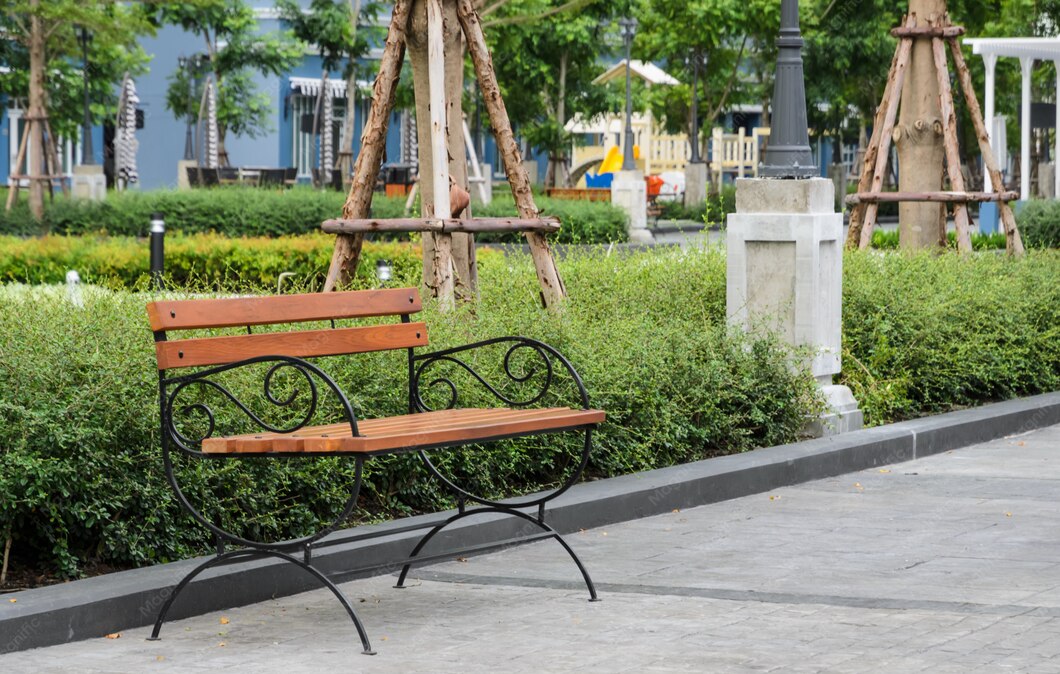
Treated wood brings warmth and texture that metal and plastic cannot replicate, and hardwoods with natural oils resist drying and cracking in hot, dry climates. It performs less predictably in humid conditions, where moisture cycling can accelerate splitting if the timber is not properly sealed and maintained.
Concrete
Concrete is highly durable, resistant to vandalism, and well suited to heavy public use in high-traffic areas. Its main limitation is heat retention in direct sun, along with a significant weight that limits flexibility once installed.
Recycled and Polymer-Based Materials
Recycled and polymer-based materials, including HDPE, resist fading, cracking, and moisture damage while requiring very little ongoing maintenance. Modern UV-stabilised formulations hold their colour and structure well even under sustained, intense sun exposure.
How Do Different Urban Furniture Materials Perform in Harsh Outdoor Conditions?
Choosing a material is easier once you can see how each one actually behaves across the conditions that matter most. The table below compares the core options against the pressures a harsh climate places on them.
| Material | Heat Retention | UV Resistance | Corrosion Resistance | Durability | Surface Comfort | Appearance Over Time | Typical Applications |
| Aluminium | Low | High | High | High | Good | Holds well | Benches, bollards, bins, bike racks |
| Stainless Steel | High | High | Very high | Very high | Poor without shade | Holds well | Structural elements, coastal fittings |
| Carbon/Galvanised Steel | Moderate to high | Moderate | Moderate (depends on coating) | High | Moderate | Fair, needs recoating | Frames, structural furniture |
| Treated Wood | Moderate | Moderate | Not applicable | Moderate | Good | Fades without maintenance | Seating, decking, planters |
| Concrete | High | High | High | Very high | Poor in direct sun | Very stable | Planters, seating bases, bollards |
| Recycled/Polymer | Low to moderate | High (UV-stabilised) | High | Moderate to high | Good | Holds colour well | Benches, bins, panels, signage |
Which Urban Furniture Materials Are Suitable for Saudi Arabia?
Given the intensity of solar exposure and surface heat across most of the Kingdom, materials that stay cooler to the touch and resist UV degradation tend to perform best for urban furniture in Saudi Arabia. In coastal cities, corrosion resistance becomes an equally important factor alongside heat performance. The materials best suited to these combined demands include:
- Aluminium, for its low heat retention and strong corrosion resistance
- Marine-grade stainless steel, specifically for coastal installations
- UV-stabilised recycled polymers, for low-maintenance, colour-stable applications
- Concrete, for heavy-duty, vandal-resistant elements where surface heat is managed through shade
- Treated hardwoods, where a warmer material aesthetic is wanted and consistent maintenance is feasible
How Do Finishes and Protective Treatments Affect Material Performance?
A base material only tells part of the performance story, since the finish applied to it often determines how well that material actually survives outdoor conditions. Powder coating adds a protective barrier against corrosion and UV fading on metals, anodising strengthens aluminium’s natural oxide layer, and sealants extend the working life of timber exposed to heat and moisture cycles. Skipping or under-specifying these treatments is one of the most common reasons a well-chosen material still underperforms once installed.
How Should Material Selection Balance Durability, Comfort and Appearance?
None of these three priorities should be resolved at the expense of the others, since outdoor furniture for public spaces needs to perform on all three fronts simultaneously to actually succeed. A material that is durable but uncomfortable to touch, like unshaded stainless steel in full sun, discourages the very use it was installed to support. The strongest specifications weigh durability, comfort, and appearance together against the specific conditions of the site, rather than optimising for one dimension in isolation.
How Does Maintenance Affect the Choice of Urban Furniture Material?
Maintenance capacity should shape material selection just as much as climate does, because a material that looks ideal on a spec sheet can become a liability if the site lacks the resources to maintain it properly. Materials with low ongoing maintenance needs, such as aluminium or UV-stabilised polymers, tend to hold their appearance and performance more reliably across large public developments where consistent upkeep across every asset is difficult to guarantee.
How Should Sustainability Be Considered When Selecting Urban Furniture Materials?
Sustainability in material selection goes beyond a single recyclable label. It includes how long a material lasts before replacement is needed, how much energy and resource its production consumed, and whether it can be repaired rather than discarded when damaged. A durable material that avoids frequent replacement often has a smaller long-term footprint than one that appears more sustainable on the surface but degrades quickly under harsh conditions.
Recycled content and responsibly sourced timber both have a place in this conversation, but they need to be weighed against real-world performance in the local climate. A material that fails within a few years, however sustainably it was produced, still generates waste and consumes resources for its replacement. The most genuinely sustainable choice is usually the one that performs reliably for the longest time with the least intervention.
How Can an Integrated Landscape Approach Improve Urban Furniture Selection?
Furniture material decisions work best when they are made alongside the surrounding landscape design, not separately from it. Shade coverage from trees or structures directly changes how much heat a material actually experiences in use, which means the planting plan and the furniture specification should be developed together rather than in isolation.
At The Landscape Company, this is how we approach material selection across our projects, weighing furniture choices against the shade, planting, and microclimate conditions of each specific site rather than applying a generic specification everywhere. That coordination is often what separates furniture that performs well for years from furniture that looks good only in the initial render.
Conclusion
There is no universal best material for urban furniture materials in a harsh climate, only the material that fits a specific site’s exposure, use, and maintenance reality. Getting that match right protects comfort, appearance, and budget over the full lifespan of the piece, not just on installation day.
Treating material selection as part of the wider landscape design, rather than a separate procurement decision, is what allows public spaces to stay comfortable and presentable years after they open. In a climate as demanding as Saudi Arabia’s, that upfront care in material choice is often the difference between furniture that holds up and furniture that needs replacing far sooner than anyone planned.
FAQs
1. What is the best material for urban furniture in Saudi Arabia?
There is no single best material, but aluminium, UV-stabilised recycled polymers, and marine-grade stainless steel in coastal areas all perform well against the Kingdom’s heat and sun exposure.
2. Which materials are commonly used for urban furniture?
Aluminium, stainless steel, carbon and galvanised steel, treated wood, concrete, and recycled polymer materials are the most widely used options.
3. Which urban furniture materials are best for hot climates?
Aluminium and UV-stabilised recycled polymers perform particularly well in hot climates, since both resist heat retention and UV degradation.
4. Is aluminium suitable for urban furniture in Saudi Arabia?
Yes, aluminium stays cooler to the touch, resists corrosion, and needs minimal maintenance, making it well suited to the Kingdom’s climate.
5. Is stainless steel suitable for street furniture in coastal areas?
Yes, particularly marine-grade stainless steel, which resists the corrosion that salt air accelerates in coastal environments.
6. How does UV exposure affect urban furniture materials?
Sustained UV exposure can fade colour, weaken polymers, and degrade untreated wood over time, which is why UV-resistant coatings and stabilised materials matter.
7. What should be considered when choosing street furniture materials in Saudi Arabia?
Heat retention, UV resistance, corrosion risk, dust exposure, and long-term maintenance capacity should all shape the material decision.